
By: Yaron Marcus
If you know anything about SEO, you know that it’s all about relevancy. Succeeding in SEO means following the best SEO practices and increasing link popularity in order to “persuade” the search engine bots that your site is truly relevant to a given set of keywords. While a small fraction of SEO projects involve fixing the technical kinks on a site that would otherwise get rankings, most campaigns are about manipulating the bots and gaming the algorithm into associating your site with your keywords.
Now, the bots are fully capable of determining on their own which sites should come up for which keywords, so SEO work is really about working the system to make sure the bots rank your site as being most relevant. I don’t know why, but something about that rubs me the wrong way.
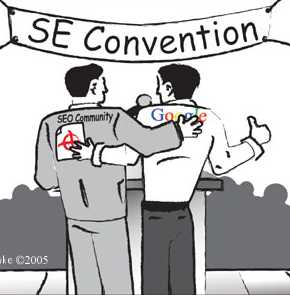
That’s not to say that I personally do not engage in SEO or that I think there are ethical issues involved. At the end of the day, SEO that is conducted to help legitimate businesses get better exposure to their end-users in a manner that is legal and does not hurt anyone along the way is a great thing. The real question is, how does SEO as an industry impact the web and the search engine business overall?
I believe any honest SEO expert would agree that for the most part, SEO only hurts the web and overall user experience. If sites that receive top rankings were there based on their true merits, such as natural link popularity and site relevancy to the keyword searched by the user, the search engines would provide more legitimate and reliable results (notice that I didn’t say more relevant results, as I believe results on Google are extremely relevant and helpful to users). Rather, the sites with top rankings are there because they have the largest SEO budgets and most talented SEO people. Add to this the billions of pages on web that are loaded with useless, keyword stuffed content, all the result of SEO people attempting to manipulate the Google bots into determining that a given site has “valuable content,” and the final conclusion is that SEO is bad for users and bad for the web.
In my opinion, the problem is not that sites appearing in the search results are irrelevant, but that the playing field needs to be leveled. In a perfect world, if a mom and pop ecommerce store has high customer satisfaction, then over time the blogosphere would spread the word around and the link juice would get them Google rankings. In reality, since the big online brands have large SEO teams and budgets, they are able to purchase “link buzz” on sites like Text Link Ads and Buy Blog Reviews, making it impossible for the little guy to compete. The net result is that the little guy may have better prices and service, yet still never get the recognition he deserves. The web was supposed to help democratize the world, giving talented people and deserving companies an equal opportunity to succeed regardless of their ad budgets. But it looks like SEO is foiling this grand vision.
A great example for “manipulation” of the system can found by searching the highly competitive keyword “dating” on Google. Aside from dating sites and dating information sources, you will find debbiedoesdating.com in the top 4 positions. This site is a dating blog with just 15 posts and a bunch of banner ads. So how does a site like this find itself ahead of actual dating sites like Match.com and dating reviews sites? Well, 60,000 inbound links should do the trick. And that’s what I found when I looked it up on Yahoo site explorer. Does anyone really believe that 60,000 webmasters found the content on this dating tips blog so valuable that they felt compelled to link to it? Obviously Google does, but I doubt anyone else buys it.
SEO is also helping to shape how sites are structured. If you Google the word “web design service” you will find two sites in the top 5 who’s design was clearly inspired by SEO and ignores their users altogether.

The first site, is essentially a link farm with dozens of internal links.

The second site, in an effort to provide lots of content for the sake of getting rankings, has placed ten articles on their homepage in gray font on a black background. This way, they get the SEO benefits of having lots of useless content without it getting in the way of having their users complete the form, because it’s nearly impossible to read. And this is coming from web design consultants. More and more, we are seeing sites that were designed to please Google rather than users. I wonder if this is what Larry Page and Sergey Brin had in mind when they set out to rank websites by quality and relevancy.

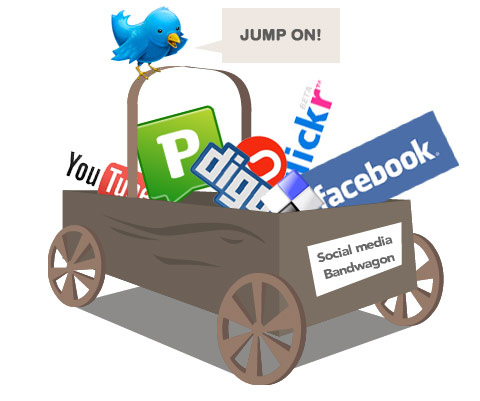
Fortunately, the social revolution can counter the “SEO effect”. While search engine results may be hit-or-miss, websites recommended by friends are much more reliable. The communities formed around review sites like Yelp are evidence of users’ increased appreciation for the opinions of others, even strangers. I know some may say that consumer review sites are not social, but trust me, users taking time to contribute their opinions simply for the sake of helping others, is very social. Further proof of this trend is Facebook’s surpassing Google in referring traffic to other sites. Aside from being prescreened for quality, sites referred to users by their friends are naturally more consistent with the values and preferences of the users themselves.
Just to be clear, I do appreciate the professionalism of many SEO experts that have developed tremendous expertise in their field. The results these people deliver are significant and have built some of the most important properties on the web. But we cannot ignore that in the long run, many of them are hurting the web.

This is just another reason for Google to watch out for the Facebook threat. With Facebook helping provide users with validation for destination sites and getting more involved in the search game, there’s hope for people like me that fear a future in which we find ourselves drinking coffee at a Google cafe, while sitting in front of a Google laptop, paying bills online through Google bank in the United States of Google. Though Google could take immediate steps to improve the web, such as removing the company websites of all SEO agencies and SEO blogs from their index or taking their gloves off when it comes to penalizing sites with suspicious growth and substandard user interfaces, I doubt that will ever happen. In the meantime, they need to better prepare for Facebook becoming a major obstacle in their path to world domination.
What is your source that referring traffic from Facebook is higher than Google? In my experience working in SEO, most websites’ largest traffic source is Google and other search engines, often by significant percentages.
David, thanks for the comment. I believe Yaron (the author) added a link to his source. This was it: http://www.sfgate.com/cgi-bin/article.cgi?f=/c/a/2010/02/14/BUU51C0AMN.DTL
Good read, yea Facebook drives more targeted traffic to other big name companies than google does http://bit.ly/OFLtu this was from an article last year. As a SEO and Social Media Marketer myself, I think social media has the potential to become the new primary advertising medium for many online marketers. In regards to SEO, I think it plays both ways. Yaron did put some examples that showed sites that were being ranked were not necessarily best for user experience, however I think the SEO game play that Google has laid out does provide a good user experience, and I am sure in the future they will add more tweaks here and there that provides an even better user experience.
Good article.
So basically what you’ve said is this:
Blah Blah Blah Blah Blah Blah Blah Blah Blah Blah
Get an original viewpoint. Something that hasn’t been rehashed 500 times in way better ways and maybe people will listen.
Also, if you knowingly know that you might aggravate a few SEO’s, which I don’t think you did, the you should make sure to secure your name as a domain name lest someone buy it and instantly (as in a few days) rank first for you name. YaronMarcus.com is available on Godaddy for 10.69 a year. #justsayin
I don’t know how I could have made it any clearer than I did in the post, so I will restate, I do not think SEOs are evil. I do SEO for several sites myself. My point is that SEO makes the web less authentic and is therefore harmful, and in the long run social media will be the big winner. Now, will everyone stop crying and get back to work?
Yaron, thanks for the post and comment. Olivier, I have to say I am pretty surprised by your comment. You are always coming out against Apple fanboys who make no logical claims but are fanboys just because they are.
Yaron made some valid points and your reaction is that?? You don’t agree with the post? Explain why. No one attacked you personally and in my opinion, your comment is a wee bit too harsh and kind of childish. But hey that is just my opinion.
In fact, I would love to see a guest post by you here negating Yaron’s points. Let me know if you are interested.
Yaron, you do not make it clear in the post that you don’t think SEOs are evil. In fact, you want Google to remove every single seo blog and site from their index!
This is you hating on SEOs:
“While a small fraction of SEO projects involve fixing the technical kinks on a site that would otherwise get rankings, most campaigns are about manipulating the bots and gaming the algorithm into associating your site with your keywords.”
“Google could take immediate steps to improve the web, such as removing the company websites of all SEO agencies and SEO blogs from their index”
Sure, there’s a lot of black hat SEO stuff going around, but it doesn’t last. Google finds out the new methods and penalizes them fairly quickly. There’s a huge amount of white hat SEO that can be done for any site, it’s a real and legitimate industry that provides a true benefit. It’s not as evil as you make it out to be.
As far as your article goes, people have been talking about the social graph replacing the link graph, but it doesn’t look like it’s going to happen anytime soon, though Google is experimenting with “Results from your social circle” st the bottom of the Universal results.
Also, I’m not sure about that link to sfgate. The stats it refers to are links to one specific type of site – web portals – not all traffic. It’s also highly untargeted, low quality traffic that does not convert into sales as well as Google’s search traffic. On that one tiny fraction of the market, the article also says that even ebay sends more traffic than Google. It’s not statistically significant.
Thanks Menachem. Who knew you were such a maven on this stuff? 🙂
Hillel. This topic’s been covered so much it’s lame. That’s what I said. That’s all I said. The post in my opinion is childish. There were no valid points there. At all. Hence my Blah Blah Blah.
Why has it been covered so much if there is no validity to it? Care to educate the rest of us about which one of the points mentioned in the post is not true or accurate?
Hillel-
It’s been covered so much because social media marketers are screaming from the rooftops that they are legit. Social media is great for building brand but has yet to prove it converts into sales. The first thing I do after someone recommends a Hotel is go a do a Google search.
The spammy kind of SEO Yaron mentioned is going to disappear for the most part over the next 2 years as quality websites start improving their on page SEO. The reason big sites don’t rank well is not for lack of quality backlinks but for poor crawlability by search spiders.
In fact several companies I know that bought tons of links in the past have stopped as these links haven’t been indexed in the May Day update.
The post shouldn’t focus on SEO’s being the issue but the sites people are creating that look to add no value such as affiliate websites. Now they make tons of money but do they create value for the users?
Mayer, thanks. I do not think anyone will debate the issues caused by scammy affiliate sites, but the fact of the matter is what Yaron was referring to when he spoke about SEO “ruining the Web”, are all the “SEO tricks” some companies use to advance sites that do not deserve to advance.
No one said there are not legit SEO companies, in fact the first mention of the word SEO in the post links to one such company 🙂 but the fact of the matter is, just like in social media, there are a lot of SEO companies out there that are ruining the web or what search was originally supposed to be.
If that’s the case my issue is with a generalization. The post doesn’t leave room for your interpretation as the author states
” Though Google could take immediate steps to improve the web, such as removing the company websites of all SEO agencies and SEO blogs from their index or taking their gloves off when it comes to penalizing sites with suspicious growth and substandard user interfaces, I doubt that will ever happen.”
I wonder if he would feel the same if Google said all affiliate sites should be removed from search both paid and organic? My guess is that business is ok just SEO is the problem.
Thanks Hillel – I’ve been in SEO for about a year now. Just started a blog dedicated specifically to Local and Mobile SEO over at http://searchlocalguy.com
I think the main issue here, and the point Mayer’s trying to make, is that not every eyeball is the equal to other one. Clickthroughs due to search (which is what SEO focuses on) are still much more valuable than clickthroughs from social media. Even if social media generates 5 times the volume, you’re probably seeing more conversions from your search engine traffic.
Think about it like this – if you sell iphone accessories, what kind of person do you want visiting your site, somebody who searched google for “buy blue iphone covers online,” or somebody who clicked a link that showed up in their facebook feed because a friend clicked “like?”
Obviously, I can’t say I don’t understand why an SEO would feel threatened by the post. But saying, “Yaron, your’e a shmuck” or “your’e lame” or “hey, that’s not true,” doesn’t really help your case and comes off as a pathetic attempt to speak over a valid argument. I’ve received lots of positive feedback from on this from SEOs who have, or are in the process offering social media services as well because they are noticing the trends.
The only thing a website has to offer the world it it’s content (articles/products/videos etc..). Manipulating this content in order to get better rankings is not in the best interests of the user. Adding links to site A in order help rank site B, is disruptive to site B’s users, otherwise it would have been there to begin with. And anyone arguing that when they acquire links from a site, they are also helping that site is full of it.
Mayer, your company focuses on helping sites are not ranking due to technical issues, that’s very different and in fact helps users access pages that they were not able to access before. It helps give those pages a fair chance. Regarding affiliate sites, they are a totally different animal and I may write about them in the future, if Hillel feels his blog can handle another “lame” article. 🙂
I like your thoughts. It is too bad that SEO has created an artificial environment. I think the answer is in the middle of SEO (good, organized, legitimate content) and authentic social media. The latter feeds the former and if invested in will gain you the results you are after. Both require strategy and attention.
I think it was a great article. I do a ton of SEO on my sites because it works, but it is a shame that someone with no SEO experience is penalized when consistently publishing great content. This is the way it (unfortunately) works though. Not the first time. There will always be room for industries to spring up when it helps to make more money.
I am with the commenter that states that Google is getting better at weeding out the crap. I read somewhere that they will be looking at the ratio of links to level of traffic (ie: why does a dating site have 60,000 links and probably close to no traffic). I am new to all of this and I’m sure Oliver will call me an idiot, but I value the discussion.
The cleaner the web (Ie: Google) is, the better it is for everyone.
Best,
Nanci
though we all google a hotel after we hear about it…we are all still skeptical from the first few links we click, as we assume they are self promoted or SEO’d so we cick a few mere.. and a few more.. until we get critical mass of the same opinion. What a waste of time.
Social media at least allows us to trust our social network the first time we query them. Nothing replaces word of mouth.