
By: @HilzFuld
I hesitated for days before writing this post because this topic is just so overblogged already that it has gotten borderline boring. Having said that, I am now strongly considering replacing my Bold with an iPhone 3Gs, and almost everyone that has heard that has asked me the same question: “Why not get the Google phone?” As I write this post, I honestly do not know the reasons that will appear below as for why I am not going to get a Nexus One, but one thing is for sure, I am not.
I would also like to step away from the rest of the million blog posts about why the iPhone is better than the Nexus, and I will do that by taking a beginner’s approach to the issue. I find it hard to believe (not really), but there are many people out there, and even many people reading this blog post that are not “techies”, and have no clue what Android is. In fact, just two days ago, in response to a tweet about Android, two of my followers asked me what Android is. I am not going to discuss the entire history of the Google mobile OS, but I think I will give a little overview of what Android is and what makes it special.
 Android is the name of the first mobile operating system that was designed and engineered (Well, kinda. They actually bought out a company called Android in 2005. Thanks Itamar.) by Google. Why do you care? Well, for starters, historically speaking, it is safe to say that any almost industry that Google has entered has changed drastically as a result. Take email for example. Yes, there was Hotmail and AOL in the Web mail space years before Gmail ever showed its face, but without even checking the official numbers, it is a fact that Web mail’s popularity over native clients such as Outlook has grown tremendously since the introduction of Gmail. Gmail changed the way we access our email forever, and I, for one, will never feel the need to use a 3rd party client such as Outlook, Outlook Express, or even Thunderbird again. Gmail is just that good!
This is true about endless industries including maps (bye bye Garmin, hello Google Maps), document editors (bye bye Microsoft Word, hello Google Docs), calendars/organizers (bye bye Outlook, hello Google Calendar), and many more. With the introduction of Android, it was clear to all, that the mobile industry was going to experience an earthquake the likes of one we have not seen since Apple entered the arena. Were we right? Well, yes and no!
On the one hand, while the Android numbers do not yet compare to those of Apple, I think in the long run, as things stand now, Google is the only one making Apple a little nervous about their current status of Makers of the Smartphone King. Unless RIM decides to pull something unbelievably different out of its sleeve, Apple and RIM primarily target different audiences. Android on the other hand, do not need to completely redo their entire OS or do anything major in order to take the throne. They are so close, yet so far.
Moving on from the name behind Android, it does bring a lot to the smartphone table besides the Google stamp of approval. Android is open while the iPhone OS is closed. What does that mean? Well, it actually means different things to different people. From a developer’s point of view, the Android Market is open in that there is no annoying and nerve wracking approval process like there is when submitting an iPhone app to Apple. I completely understand the frustration of developers when working on an app for months and having it rejected by Apple for no apparent reason. Apple does not allow Google apps in the app store, so there clearly is no pulling strings with Apple. They decide what to let into the App Store and that decision is almost always final.
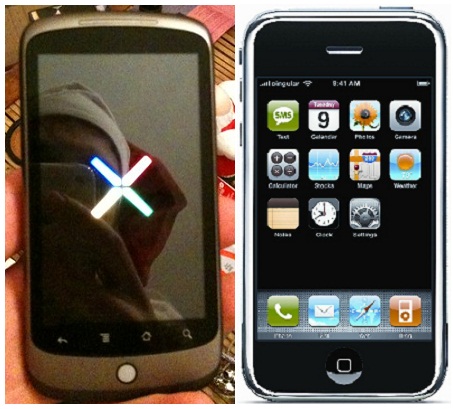
Going beyond the approval process, the actual development for Android is completely different than on the iPhone. The Android code (and I have to admit here that I know close to nothing about app development, so if I got the lingo wrong, please forgive me) is open source, so anyone can access it and customize it how they see fit. That is why you will see one Android on the Samsung Galaxy and a totally different looking OS on the HTC Magic. Each manufacturer changed the OS to fit their own needs. Now on the one hand, transparency is always good, so having access to the insides of the Android OS is a blessed initiative on the part of Google. However, as usual, from a consumer’s point of view, this is a disaster. Every app developed for the Android platform has to be redeveloped for each and every phone. An app that works flawlessly on the Droid might not even work on the Nexus. This obviously causes frustration among Android users, and from what an Android developer, who will remain unnamed, told me, it does not make their life easier either.
However, the development process is not where it ends. Apple’s entire experience is closed. This can be felt in all aspects of the iPhone from the non-replaceable battery, to the inability to run more than one app at a time, to the lack of full customization of the iPhone, which can be seen in changing things as basic as ringtones. At the end of the day, Google’s OS is best known for its open nature, while the iPhone is known to be jail-like.

OK, now you should have a basic idea of what all the excitement is about, and when you add to all that, the fact that Google actually designed the hardware of the Nexus One in addition to its OS, you might get a clearer picture of the unprecedented hype it has generated.
Now to the big question… iPhone or Nexus? Well, as tempted as I am to write a short list of things I like better about the iPhone OS and the iPhone itself, the reasons I am not getting a Nexus cannot be summarized in the bullets of a blog post. As so many reviewers have written, Android, even with all the improvements of version 2.1, still feels half baked when compared to the most polished mobile OS in the industry.
Before I get into Android and its shortcomings, to be fair, I will say that the Nexus has some serious advantages over the iPhone, and to ignore them, would just be lying to my readers. I am sure I am going to get many comments on this post calling me an Apple fanboy, and writing about the iPhone’s disadvantages won’t change that, but to clarify, I am still using a BlackBerry as my primary mobile device, and I am still not sure that is going to change any time soon.
So the Nexus has a bigger and higher resolution screen than the iPhone, you can’t argue with facts. The processor is significantly faster than that of the iPhone. The initial reviews point to a stronger and longer lasting battery, but more important than the battery’s standby time, the Nexus One has a replaceable battery, while the iPhone does not and you need to have Apple replace it for you, which takes both time and money from the consumer. The Nexus has expandable memory, which might be an advantage when Micro SD cards exceed their current capacity, but right now, the iPhone 3Gs offers 32GB of storage, and with an SD card, the Nexus, I believe maxes out at 32GB as well. Then again, when they start making 64GB SD cards, I am pretty sure there will be a higher capacity iPhone on the market as well. The Nexus has some other advantages over the iPhone, but generally speaking, they all stem from the basic philosophical differences of Open vs Closed.
So, this all sounds great, why am I not getting a Nexus? In reality, I could end this post with a link to one of my favorite tech blogs, Boy Genius Report, where he discusses his personal feelings about using a Nexus vs an iPhone. The post can basically be summarized by saying that Android OS was clearly designed from the ground up based on statistics and numbers, while the Apple OS was designed purely based on the most superior user experience. Apple spent years researching what users like in their phones, and built the ultimate device in terms of its usability. For that reason exactly, the iPhone is closed. They do not want you “damaging” their phone’s exreme ease of use with apps running in the background eating away at the battery. Apple wants to carefully monitor what apps are approved for the App Store, since they spent all that time making the phone so user friendly (yes, I know this does not explain the Google apps rejections), and Apple does not want people opening the phone both hardware and software, since they believe they have created the perfect overall device.
 So, it seems like I am justifying Apple’s jail-like mentality. Well, in a way, I am. Yes, in an ideal world, I would like the entire mobile experience to be in the hands of the consumer, but today, when the two choices are complete freedom or top notch user experience, both in terms of app development and usability, I prefer a better experience. Before you jump down my throat, and claim that the Android experience is not any worse than the iPhone’s, let me give you a few examples of what I mean. A perfect indication or summary of the App Store (Apple) vs the App Market (Android) debate is Twitter apps. Whatever Twitter app you choose on the iPhone, open it, then take Seesmic, which is generally considered to be the best Android Twitter app, and compare the two apps. I could go on and on explaining how, as much as I like Seesmic for Android, comparing it to Echofon, Tweetie 2, Twittelator Pro, or Tweetings, would be like comparing a Nissan to a Mercedes. They both get the job done, but the experience…
So, that is in regard to 3rd party apps and I took Twitter apps as an example, but feel free to run that comparison with any other app on the two platforms, try Facebook for another extreme example. Let me also clarify that at no point did I mention the 130,000 apps on the App Store compared to the 20,000 on the Market, since if those 20,000 were quality apps, I would not even pay attention to the numbers. I am talking quality here, not quantity.
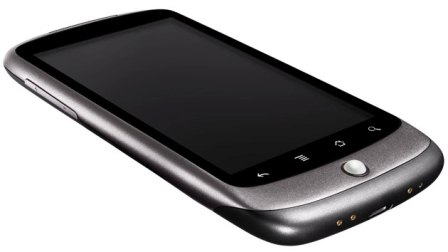
“OK, so the App Store has better apps, but the phone’s experience is just as good on the Nexus.” Is that what you were about to say? Well, I disagree. One of the common threads I have noticed in almost all the Android reviews I have read (and I have read a lot) is that when using Android for the first time, you generally don’t “get it”, but after a week or two, you discover the Menu button or you begin to understand the concept of the Back button and it all starts to click. That, I think, pretty much sums up the basic difference between Android and iPhone OS. With iPhone OS, you do not need that week, when you open the iPhone for the first time, whether you are 3 or 70 years old, it all clicks (trust me, I tested this). For some concrete examples of Android usability issues including screen shots, check out this review.
Generally speaking, the iPhone is the ultimate phone in terms of usability and when the first generation iPhone was released that simplicity came as a tradeoff for “advanced” features such as 3G or copy and paste. Now, 3 generations later, the iPhone as a smartphone, can pretty much compete with the best of them, with the exception, some might say, of the email experience and running background apps.
 Like I said in the beginning of this post, the reasons I am not considering a Nexus cannot be summed up in a list called “Five Reasons I Am Getting a Nexus over an iPhone”. Trust me, I wish they could, it would get a lot more attention from the online community (people like lists), but there is no such list for me. I could give some examples of why I prefer the iPhone OS over the Android OS, the biggest one for me being the text input, which is one of the more frustrating things I have experienced in a long time. However, the bottom line is, I prefer the iPhone, not because of this feature or that. To me, a phone, which serves my every need throughout the day must have the best user experience. If that means, developers are going to have to make a top notch app in order to make it into the App Store, as much as I feel for developers who get rejected, at the end of the day, the app is here to serve the user and not the other way around. A short walk through the Android App Market will clear things up for you. It is confusing, hard to navigate, and overflowing with bad apps, not to mention loaded with things that are not even apps, but rather add ons to existing apps. That would not fly with Apple.
In conclusion, I am sure if anyone in the market is making Steve Jobs lose sleep at night, it is Google, but the time when Google will really offer a consumer experience equal to the iPhone’s, in my opinion, is far off. Having said that, the Nexus is BY FAR (I don’t generally like capital letters mid sentence, but extreme times call for extreme measures) the best Android phone to date and there are definitely some users who will prefer the Nexus One over the iPhone. There are those that will prefer it out of protest of Apple’s closed philosophy, there are those power users that will prefer it since running one app at a time aint gonna cut it for them, and there are those that will prefer it because they see what Android might be five years down the road.
For me, I need a top notch user experience now, I need quantity and quality apps for my phone, and I need to be able to type on my phone without getting more grey hairs every time. Now, the big question is, am I willing to give up on my first rate email experience courtesy of my BlackBerry Bold, in order to have all those things? Check back with me in a week, might know more then.
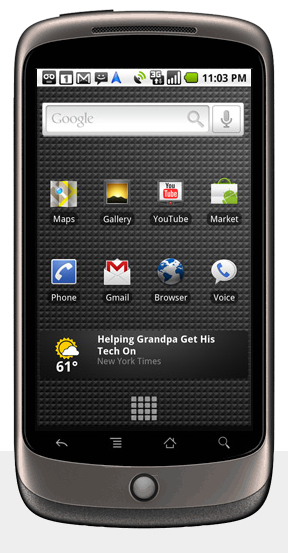
What are your thoughts on the whole Apple/Google/RIM battle? Who is your favorite and why? Please let us know in the comments.
And not a mention of Nokia. Team Finland are suffering for being a mobile phone first company not a consumer brand.
Ill take substance over style any day. Don’t assume all phone owners are simpletons and would prefer a simpleton device.
In your same logic my Nokia 5670 ‘worked’ flawlessley and was easily understandable from 3 to 1003 years old too.
Apple have one thing going for them and its marketing. They could sell cow turds to farmers. But those not easily swayed tend to see over the gloss and see the many downfalls of the iPhone, like you mention ringtones/themes etc and having to let iTunes moderate the device.
It does go down to what the end user prefers and what they expect from a phone. The ‘it just works’ analogy just doesn’t cut it with the iPhones inadequacies. Even recent Nexus comparisons how come down to the number of apps on their respective app stores and which device has the most accurate touchscreen. What next are we going to compare how shiny the back cover is, or how many skin cells you screen erases?
All you need is a gimmick and Apple brought it out 3 years ago, it sold millions, just like iPods, macbooks and other ‘cool’ devices, 3 years later it looks like they don’t know where to turn next. You can’t possibly bring 4G network into it as most of the worlds population and carriers can’t even get 3G at decent/reliable speeds.
Apple brought out a ground breaking device 3 years ago, and now they will be replicating Rim and Android to see what ‘new’ feature Apple can invent like multitasking. Just remember how Apple invented ‘3G’. They do truly have brainwashed the style over substance brigade and if it was ever considered cool to smear your own faeces over your face I’m sure there eventually ‘would be an App for that’.
RIM is out… giving up on the Bold too… unable to offer a decent experience in terms of third party apps… if you intall too many new apps, it basically dies 🙂
I went from BB 8800 to iPhone 3GS for the simple reason that only Apple seem to understand Mac syncing (I work and play on a MacBook Pro). As for things like themes and ringtones, most people over the age of 13 really don’t care. My 8800 had WAY more settings for ringtones – it was beyond ridiculous – and the only one I ever used was the phone sounding one. I may be odd, but I just need my phone to make some phone-type noise when people call, and that’s it. If I hear Groove Armada, I’m not going to think ‘oh, my phone is ringing’. Just make it ring, thank you!
The vast array of apps make the iPhone perfectly customizable. My iPhone is My iPhone because of the apps I have installed and how I use it. Which is my point- I just use the damn thing. I don’t have to show off to friends that I have the latest specs.
Then again, I may just be a poop-buying farmer.
If you’re going to write a review comparing the iPhone to the Nexus it would help if you have actually used a Nexus instead of citing other sites as your source material.
What I read here is…if it has an apple label on it…it must be good. There’s a reason apple only has a 10% market share of computers…closed systems.
GREAT POST Hillel. As a Bold user myself, I’ve been thinking the same things and wondering if its time to jump on the Apple bandwagon, but the keyboard and MS Outlook Exchange email is the main reason I have a BB and until someone can prove to me that it is just as easy to type and receive email, the apps are not that big of a deal to me.
I will continue to follow and see what you do!
@EdCabellon
This is a very good and unbiased write up.
Apple is certainly a nice device, but common, after 3 years it’s still the same? What can they possible do to make it better and more appealing over the open sourced Android?
It was so ‘cool’ and ‘great’ when it was launched, yet it could not support MMS and Bluetooth? Why do you think there is so much Jailbreaking going on out there? Apple has a large fanboy club …. Apple just want you to do things there way or the high way ………..
Open source is the way forward, and I’m sorry but Google IS a threat to Apple.
Nice balanced (even seemingly logical) appraoch. I’m a Bold user myself, and frankly was getting tired of all the brand/device zealotry raging online..
I’ll engage you after the week you say you require..
It amazes me how passionate “iPhone haters” are. They rant on and on about iPhone “short comings”. It almost comes across as jealousy or frustration. If you don’t like the iPhone experience then don’t get one. There is no reason to stress out!
Apple has another advantage: the iPod Touch. A whole ‘nuther platform for the app market, independent of the iPhone. Nobody else has that, B&N nook aside.
Interesting view on the 2 options, I’m in a similar boat where I’m ready to move up from a very basic LG phone to something more capable and having a hard time adopting the newer tech of Android (and all of the decisions about which model & carrier to fork over my cash to) or go with an iPhone and accept the known shortcomings. I’m also only paying about $40/month don’t want to increase my bill by $50 or more, I’ll opt for a non-data plan before that happens.
As for the argument that Apple is relying on smoke & mirrors without any substance, I can only cite the typical hostile attitude of Apple Haters. Case in point: My Wife. She’s not the most techno-savvy person in the world & was very skeptical when I got her an iPhone 2 years ago. Within a few days, she was amazed that she could perform all the tasks she wanted, without constantly asking me for help. That, more than any ad campaign, speaks to the user interface & forethought that goes into a successful piece of hardware. Does she care that the 3G isn’t as fast as our Fios connection? Not even remotely, but it’s something that will keep me form seriously considering an iPhone, at least while it’s tethered to AT&T.
I didn’t ‘upgrade’ from iPod Touch to iPhone simply because I want to be able to move songs and videos and other stuff on and off my phone as i wish.
I bought an HTC Magic android phone instead. I guess I prefer a very useful tool (android) to a Ferrari that’s wheel-clamped (iPhone).
I can do so many things with my android phone that just can’t be done AT ALL with an iPhone:
1. Copy any file on or off the phone from any source.
2. Share any file with a friend.
3. Delete any file without needing to connect to an ‘iTunes”.
4. Backup my phone’s file to anything handy…. sdcard, ftp site….whatever.
5. swap my battery for another one when it gets low.
6. Swap my 16GB sdcard for another one when if fills up.
7. Buy apps from any of several markets – not just one – or buy an app direct from the developer….and just install it.
This is meat and potatoes stuff *anyone* will want to do with their phone.
Can’t do any of it with an iPhone.
No thanks. No wheel clamps. Android all the way….whether its a Nexus One or something else…I don’t care. They all offer me more freedom than iPhone.
I call bullshit, “iFart” is not a top notch app. The App Store ‘approval process’ is more about keeping out the competition (to Apple apps) not about quality.
“If that means, developers are going to have to make a top notch app in order to make it into the App Store, as much as I feel for developers who get rejected, at the end of the day, the app is here to serve the user and not the other way around.”
Yeah, except the Google Voice app by Google itself, it seems. That got rejected because Apple didn’t like how it changed some things in the user interface for texting and/or dialing calls/voicemail/etc )only when you used the app, though, not all the time… but, hey, if it isn’t Apple’s implementation it’s wrong; right?)
Trust me, the official GV app is top quality. But Apple still didn’t approve it.
I have a different take on this. I’m not saying you’re wrong and I’m right, it’s just a totally different angle. I’m a person that happens to LOVE Android, and most all things Google.
I bought the G1 the first week it was released, bought the myTouch3G on launch day, and will be getting the Nexus One in the next week or so. I love the openness of the Android (app) market, the OS, and the customization capabilities. I love that Google did not shut down the “hacked variety” of the OS (CyanogenMod), and instead worked directly with the developer to ensure he was not bundling pre-installed Google apps with the hacked ROM. Can you imagine Apple even speaking directly with someone like this?
So for me, openness is everything. It doesn’t mean my experience is less because certain Android devices differ from others. They differ because of the openness of the OS, which actually makes it a better user experience for me. Different is what I want. I want to customize it – I want to tear it apart, and put it together how it works best for me.
User experience won me over with Android, the same way user experience won you over with the iPhone. We just so happen to be two different people, with different desires and expectations of what that user experience should be.
Wow, lotta comments here. Some calling me a “fanboy” as expected, and some calling me a “Apple Hater”. In any case, thank you all for reading, appreciate your feedback. One thing I would like to address is Mark’s comment.
I do not see anything wrong with writing a piece about the Android concept vs the iPhone concept with having a Nexus. I use a different Android phone, so I am not a complete stranger to it. In any case, if I misunderstood, I apologize, but I think that was uncalled for.
Would love to connect with all of you at http://twitter.com/hilzfuld
I carry quite a few toys – currently it is a 3GS and a Blackberry curve.
Sitting in the briefcase are my Nokia E71, Samsung SGH-i780 and HTC Diamond.
The best phone in the group was actually the Nokia – for getting emails pushed from our outlook server, using limited ‘where am I now?’ GPS and good talk quality. But unfortunately it took a serious fall from the table and is toast. The 3rd party application side was pretty painful for me and certainly a negative point.
My iPhone is just more fun when compared to all the others. But, half way through the day and it is dead. The danger around building a great UI, wonderful audio/video player with some good games is that it actually gets used a LOT. If I used my iPhone the way I really want to, it would be dead in just about 2 hours – which makes all of those other features worthless. Add to that was my constant thinking… why aren’t there more applications that I want and why do I need big brother Apple telling me what is okay? (Maybe for good reason but I still resent it.)
My curve last the day even though it isn’t as fun. Here in Indonesia you need a Blackberry device to chat with your friends as it is the most popular chatting vehicle around.
We just brought in some Motorola Cliqs to take a drive and I am looking forward to a Nexus but right now, give me an Apple iPhone 3GS with a removable 1900mAh battery (and few spares) and I’d be satisfied for the next 3 – 6 months.
Not having had a chance to try HTC’s new UI overlay on Windows limits my experience but I do want to see the latest there – unfortunately battery , usability and consumer experience just haven’t hit it that elusive sweet spot yet.
Today – IMHO we still need a few devices – Work, Play and Just In Case.
“Apple does not allow Google apps in the app store, so there clearly is no pulling strings with Apple. ”
Apple does allow Google apps in the app store. They currently have Panoramio, Google Earth, and the Google Mobile App.
They haven’t let Google Talk in, but they don’t restrict apps just because they’re from Google.
Michael, thanks, I stand corrected, that was an inaccurate statement on my part. What I meant was that if Apple does not allow a Google app (even if it is only one), there clearly is no pulling strings with them. Anyway, thanks for the comment.
Wouldn’t it be funny if Google took Google Maps off the iPhone and used it for their devices only….. Watch this space…
I just bought the nexus and have used my sisters iphone side by side and i am so glad I bought the nexus over the iphone It blows it away, Only advantage iphone has is app store where 95% of the apps are worthless Android has a ton of apps and did not find one from apple that i wish I could get on my nexus. Nexus has multi function which is huge, bigger better screen, faster processor, better camera, live wallpapers and thats just a few. Im sure its just what every ones taste is but for me I love my nexus best phone I have ever had.